
The Best USB Condenser Microphones for a Shared Room or Rented Apartment
8 USB condenser microphones compared for home office and apartment use, plus honestly-flagged dynamic alternatives for untreated rooms. Compare self-noise, mute buttons, and gain staging.

New to Amazon Prime?
Get fast, free shipping on every pick in this guide, plus Prime Video and exclusive deals.
Try Prime Free


At a Glance
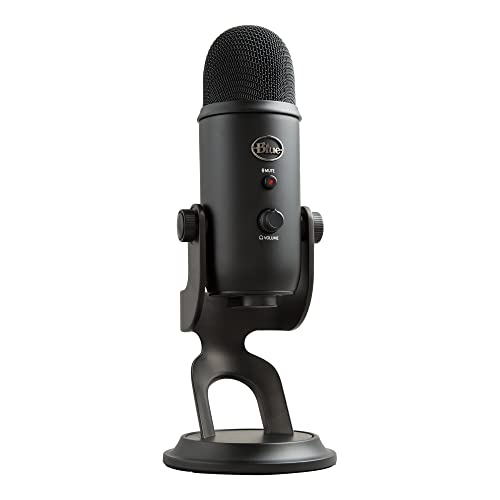
Blue Yeti USB Microphone, Blackout Edition (Renewed)
↓ See why we picked itA USB condenser microphone captures more detail and nuance than a dynamic mic, but that sensitivity is a double-edged sword, it also picks up rain, AC units, street noise, and mechanical keyboard clatter more readily. That's a bigger deal in a small apartment, a dorm, or a bedroom doubling as an office than in a treated studio, since none of those rooms do much to absorb sound on their own. Because several of the most relevant mics on the market right now are actually dynamic capsules marketed alongside condensers for the same desk setups, this list is honest about which is which rather than calling every pick a condenser when it isn't.
Below are 8 USB microphones we evaluated for condenser and condenser-adjacent desk use, including true condensers plus a few honestly-flagged dynamic alternatives worth considering if your room isn't treated, ranging from a $29.99 budget condenser to a full boom-arm XLR/USB kit.
This comparison is based on manufacturer specifications and published buyer feedback, not hands-on testing in our own space.
5 Criteria to Look For Before Buying a The Best USB Condenser Microphones for a Shared Room or Rented Apartment
Key buying criteria so you get the right fit the first time.
Decide whether your room can actually support a condenser before comparing pattern count or price
A condenser capsule is more sensitive than a dynamic one, which means it also picks up rain on a window, a housemate's TV through a wall, an AC unit, or street noise far more readily, none of which show up in a spec sheet.
This matters most in an untreated bedroom, dorm, or apartment, where none of those sounds are being absorbed by soft furnishings or distance the way they might be in a larger house.
If your room is genuinely noisy or shared, a dynamic mic will likely sound cleaner in practice even though it captures less detail; check a few reviews from buyers in apartments or shared spaces before assuming a condenser is the right call.
Check polar pattern count against what you'll actually record
Cardioid picks up sound mainly from the front and is the default for solo voice, omnidirectional captures the whole room evenly, and bidirectional/stereo patterns exist for two-person interviews or room ambience, most budget condensers only offer cardioid, while flagship models add the other three.
This matters directly if you'll ever record an in-person interview or want to capture natural room sound, a cardioid-only mic simply can't do that job well regardless of how good it sounds for solo voice.
Check the specific patterns listed, not just "multi-pattern," and match that against whether you'll ever need more than a single voice close to the mic.
Look for a published self-noise spec, and treat its absence as a real gap
Self-noise, measured in dB-A, is the hiss a condenser produces on its own even with nothing being recorded, mics under roughly 20dB-A sound clean in quiet recordings while mics above 25dB-A introduce audible hiss, and this spec directly separates a clean-sounding budget condenser from a hissy one.
This matters more the quieter your recording environment is meant to be; hiss that's masked by background noise in a noisy room becomes obvious in a treated one.
Check the listing and manufacturer page for a stated self-noise figure, and if none is published, treat the mic's noise floor as unverified rather than assuming it matches a pricier condenser.
Confirm bit depth matches how much post-production editing you'll actually do
16-bit recording is adequate for straightforward voice use like meetings or casual streaming, while 24-bit captures more dynamic range, giving you more headroom to adjust levels after recording without introducing extra noise.
This matters more if you plan on editing recordings after the fact, boosting quiet sections or applying compression, less if you're recording for live calls or casual use where the output is heard once and not reprocessed.
Check the stated bit depth, and don't pay a premium for 24-bit recording if your actual use case is live meetings or casual streaming rather than post-production.
Check for a hardware mute button and headphone jack, not just a mute feature in general
A hardware mute button responds instantly, while a software or touch-based mute can lag or mis-trigger, and a headphone jack lets you monitor your own gain staging in real time rather than finding out after the fact that levels were clipping or too quiet.
This matters more for calls and live streaming, where a laggy mute risks a moment of hot mic audio, and less for pre-recorded content where you can catch gain issues in post.
Check specifically whether mute is hardware (instant) or software/touch (some lag or accidental-trigger risk), and confirm a headphone jack is included if real-time monitoring matters to you.
The Best USB Condenser Microphones for a Shared Room or Rented Apartment
Logitech Blue Yeti USB Microphone (Midnight Blue)
About this pick
The Blue Yeti is a true condenser microphone with 4 selectable pickup patterns, cardioid, omnidirectional, bidirectional, and stereo, and Blue VO!CE software for real-time voice shaping. It is the most flexible condenser in this list for switching between solo recording and room capture.
Gain staging matters here, set the input gain too high and loud passages clip, too low and you introduce audible noise, a common reason a mic sounds bad even though nothing is actually broken. Start with gain around the midpoint and adjust while monitoring through headphones rather than guessing by ear alone.
Skip it if your room is untreated and noisy, an apartment near street traffic, a dorm, or a bedroom you share; the capsule's sensitivity works against you there, and the FIFINE AmpliGame AM8 dynamic pick further down this list will sound cleaner in that environment.
Best for: A treated or quiet room where full pattern flexibility matters most
Check price on AmazonPros
- +4 pickup patterns for solo or room recording
- +Blue VO!CE software adds real-time voice shaping
- +Headphone jack for zero-latency gain monitoring
- +Most established condenser option in this list
Cons
- −Sensitive capsule picks up untreated-room noise readily
- −Software mute has slight lag versus a hardware button
- −Larger desktop footprint than the Nano
Logitech Blue Yeti Nano USB Microphone (Blackout)
About this pick
The Blue Yeti Nano is a true condenser mic in a smaller body, with cardioid and omnidirectional patterns covering the two most common use cases, solo voice and small-room capture. It works as plug and play on both Mac and Windows without extra driver setup.
Driver behavior is worth checking either way, some condenser mics need a driver install on Windows but run plug and play on Mac, or vice versa, so confirm compatibility with your specific OS version before assuming zero setup is required. Its compact footprint makes it easier to fit on a small desk than the full-size Yeti.
Skip it if you need bidirectional or stereo pickup for interviews or room recording; the Nano's 2-pattern selection covers solo and small-room use only, and the full Blue Yeti above adds the other two patterns for not much more money.
Best for: Small desks that still want a true condenser without the full Yeti's footprint
Check price on AmazonPros
- +Smaller footprint suits a small desk
- +Simple 2-pattern selection
- +Plug and play on both platforms
- +Headphone jack for monitoring
Cons
- −Fewer patterns than the full Yeti
- −Still condenser-sensitive to room noise
- −No XLR output for a future upgrade
FIFINE K669B Metal Condenser USB Microphone
About this pick
The K669B is a genuine condenser mic in a metal body at the lowest price in this list, with a cardioid pattern for meeting audio, voice recording, and casual streaming. It records at 16-bit, which is fine for most desk use but worth knowing if you plan to do heavier post-production.
Self-noise is the spec that separates a clean-sounding budget condenser from a hissy one, mics under roughly 20dB-A self-noise sound clean in quiet recordings, while mics above 25dB-A introduce audible hiss. FIFINE does not publish a self-noise figure for this model, so treat it as an unknown at this price rather than assuming it matches pricier condensers.
Skip it if you want a hardware mute button or headphone jack for real-time monitoring; neither is included here, and the TONOR TC310+ below covers both for the same price.
Best for: Budget buyers who want a genuine condenser rather than a dynamic alternative
Check price on AmazonPros
- +Lowest price of any true condenser here
- +Metal body feels sturdier than the price suggests
- +Simple plug and play setup
- +Reasonable first condenser mic
Cons
- −16-bit recording, not 24-bit
- −No published self-noise spec
- −No hardware mute button or headphone jack
TONOR TC310+ Condenser Microphone Set with Boom Arm
About this pick
The TC310+ is a true condenser paired with an included boom arm, RGB lighting, and a tap-to-mute button, aimed at streaming and content creation. Onboard gain control lets you adjust input level at the mic itself rather than relying only on software.
A boom arm matters more on a condenser than on a dynamic mic precisely because the condenser is more sensitive, keeping it off the desk surface reduces the keyboard clatter and desk vibration a flat-mounted condenser would otherwise capture in full detail. This is one of the more complete budget condenser kits in this list.
Skip it if your desk sits against a shared wall or near street noise; the boom arm solves keyboard vibration, but it does nothing for the condenser's sensitivity to ambient room sound.
Best for: Streamers who want a complete condenser kit with a boom arm at a low price
Check price on AmazonPros
- +Boom arm included at a budget price
- +Onboard gain control for quick adjustment
- +Tap mute with visual RGB status
- +Complete kit for budget streaming setups
Cons
- −Condenser sensitivity still needs a reasonably quiet room
- −RGB lighting is extra visual clutter for some buyers
- −No XLR output for a future interface
FIFINE AmpliGame AM8 USB/XLR Dynamic Microphone
About this pick
To be direct, the AM8 is a dynamic microphone, not a condenser, and it earns a spot in this list specifically because condenser sensitivity is not always the right call. If your room picks up rain, a window AC unit, street noise, or a housemate's TV, a dynamic capsule like this one rejects that background noise far better than any condenser above.
Skip it if you're recording in a genuinely quiet, treated space; a true condenser like the Blue Yeti Nano will capture more natural detail there, and the AM8's noise rejection is solving a problem you don't have.
Best for: Buyers whose room isn't treated and shouldn't buy a condenser at all
Check price on AmazonPros
- +Best background-noise rejection in this list
- +Hardware mute button with no lag
- +USB and XLR output for a future upgrade
- +Better fit than any condenser here for an untreated room
Cons
- −Not a condenser, less detailed capture in a treated room
- −Included stand is basic compared to a real boom arm
- −RGB lighting adds bulk some buyers won't want
FIFINE AmpliGame AM8T XLR/USB Gaming Microphone Set
About this pick
Also worth flagging honestly, the AM8T is a dynamic mic, not a condenser, but it ships as a complete kit with a boom arm, hardware mute button, and headphone jack included. For a desk with a mechanical keyboard, the combination of a dynamic capsule and a boom arm off the desk surface handles noise better than any condenser in this list, regardless of mounting.
Mac vs Windows driver behavior can differ between condenser mics, but dynamic USB mics like this one are generally more plug-and-play consistent across platforms, one more reason to consider it over a condenser in a mixed-noise environment.
Skip it if you don't need XLR headroom for a future audio interface; the standalone FIFINE AmpliGame AM8 covers the same dynamic capsule and hardware mute for less, without a boom arm you may already own.
Best for: A desk with a mechanical keyboard where a condenser would pick up too much clatter
Check price on AmazonPros
- +Boom arm included, avoids desk vibration and keyboard noise
- +Dynamic capsule outperforms any condenser here in noisy rooms
- +Hardware mute with no lag
- +USB and XLR output for a future interface
Cons
- −Not a condenser, captures less room detail
- −Bulkier full kit than a standalone mic
- −Boom arm needs a clamp point on the desk edge
FIFINE K688 Podcast Microphone Kit with Boom Arm
About this pick
One more honest flag, the K688 is a dynamic mic rather than a condenser, positioned here as the podcast-focused alternative for buyers whose room can't support a condenser's sensitivity. It includes a boom arm, hardware mute button, and headphone jack in one kit.
Dynamic mics like this one are generally less picky about gain staging than condensers, since they capture less ambient detail overall, but you should still monitor levels through the headphone jack rather than assuming the default gain is correct for your voice.
Skip it if you want a single mic that can also handle interviews or room ambience; without pattern switching, it's built for one voice close to the capsule, not flexible room capture.
Best for: Solo podcasters in an untreated room who want a dedicated boom mic
Check price on AmazonPros
- +Complete podcast kit with boom arm included
- +Dynamic capsule suits untreated home offices
- +Zero-latency hardware mute
- +USB and XLR flexibility for future setups
Cons
- −Not a condenser, no pattern switching
- −Less natural room ambience than a true condenser
- −Boom arm clamp needs a compatible desk edge
Blue Yeti USB Microphone, Blackout Edition (Renewed)
About this pick
This renewed Blue Yeti is a true condenser with the same 4 pickup patterns as the full-price model, cardioid, omnidirectional, bidirectional, and stereo, at a lower price for buyers comfortable with a factory-refurbished unit. Recording is 24-bit/48kHz, matching the non-renewed version's specs.
As with any condenser, room treatment matters more here than with a dynamic mic, and it's worth checking the seller's return window on a renewed unit before committing. For anyone set on a true condenser rather than one of the dynamic alternatives above, this is the most affordable way into full Yeti pattern flexibility.
Skip it if you'd rather have full warranty coverage and don't mind paying full price; the standard Blue Yeti above carries the same capsule and patterns without a renewed unit's shortened return window.
Best for: Budget-conscious buyers who specifically want a true condenser, not a dynamic alternative
Check price on AmazonPros
- +Lower price than a new Blue Yeti
- +Same 4-pattern flexibility as the full-price model
- +24-bit/48kHz recording quality
- +Headphone jack for monitoring
Cons
- −Renewed condition means checking the return policy closely
- −Condenser sensitivity still applies
- −No hardware mute button
How We Evaluated These The Best USB Condenser Microphones for a Shared Room or Rented Apartment
Each pick was assessed across 5 criteria weighted for real-world use.
Capsule type verification
Checked each listing closely to confirm whether it was a genuine condenser capsule or a dynamic capsule marketed for the same desk use cases, and labeled dynamic picks honestly rather than folding them in as condensers.
Room suitability
Weighed condenser sensitivity against typical desk environments, treated room, untreated bedroom, or shared apartment, since this determines whether a condenser is even the right choice before comparing features.
Self-noise and bit depth
Noted published self-noise specs and recording bit depth where available, since these directly affect how clean a condenser sounds in a quiet recording versus introducing audible hiss.
Mute button and monitoring
Compared hardware mute against software mute, and checked for a headphone jack, since real-time monitoring is how you catch gain staging problems before they end up in a recording.
Value for price
Weighed included accessories, boom arms, mute buttons, patterns, against price, from the budget condenser up through the full-size Blue Yeti.
How to Choose the Right The Best USB Condenser Microphones for a Shared Room or Rented Apartment
Condenser or Dynamic, By Room Type
| Your room | Recommended pick |
|---|---|
| Treated or genuinely quiet room | Logitech Blue Yeti USB Microphone |
| Shared apartment, dorm, or noisy street-facing room | FIFINE AmpliGame AM8 USB/XLR Dynamic Microphone |
By Budget
| Budget | Recommended pick |
|---|---|
| Under $30 | FIFINE K669B Metal Condenser USB Microphone |
| Up to $90 | Logitech Blue Yeti USB Microphone |
FIFINE K669B Metal Condenser USB Microphone vs Logitech Blue Yeti USB Microphone
FIFINE K669B Metal Condenser USB Microphone
The lower-priced option in this comparison, worth checking its actual specs and review history against your specific need before assuming it's enough.
Logitech Blue Yeti USB Microphone
The higher-priced option, worth it if it offers real, checkable headroom in build quality, capacity, or features over the cheaper pick.
Default to FIFINE K669B Metal Condenser USB Microphone unless your specific need genuinely calls for the pricier pick's extra headroom.
By Review Base Confidence
| Your priority | Recommended pick |
|---|---|
| Largest, most-established review base | Logitech Blue Yeti USB Microphone |
For a First-Time Buyer Specifically
Look for
Clear, specific dimensions or capacity and a real, established review history, not just marketing language.
In this comparison
Logitech Blue Yeti USB Microphone is worth checking against its listed specs and polar-pattern options before buying, since Blue's mic line is the most established name in this category.
When to Spend More
Spend more if
You need real durability and feature depth for regular use, where Logitech Blue Yeti USB Microphone's build gives real headroom over the cheaper picks.
Save if
You only need this for light or occasional use, where FIFINE K669B Metal Condenser USB Microphone covers the same job at a lower price.
Frequently Asked Questions
Is a USB condenser microphone always better than a dynamic one?
No. A condenser captures more detail and nuance, but it also picks up rain, AC units, street noise, and keyboard clatter far more readily than a dynamic mic. If your room isn't quiet or lightly treated, a dynamic mic like the FIFINE AmpliGame AM8 will likely sound cleaner in practice, even though it's technically less detailed.
What does self-noise mean and why does it matter?
Self-noise, measured in dB-A, is the amount of hiss a condenser microphone itself produces even with no sound source present. Under roughly 20dB-A is considered clean, above 25dB-A produces audible hiss in quiet recordings. Not all budget condensers publish this spec, so treat it as unverified if it's missing.
What's the difference between 16-bit and 24-bit recording for a USB mic?
24-bit recording captures more dynamic range, giving you more headroom to adjust levels after recording without introducing extra noise. 16-bit is adequate for straightforward voice use like meetings or casual streaming. Most desk use won't notice a practical difference unless you're doing heavier post-production editing.
Why does my condenser microphone sound bad even though it's not broken?
The most common cause is gain staging, the input level set too high causes clipping, too low forces you to boost the signal later and amplifies background noise along with your voice. Set gain near the midpoint and monitor through headphones rather than guessing by ear alone.
Do all the microphones in this guide have condenser capsules?
No, and this list is upfront about that. Several picks, the FIFINE AmpliGame AM8, AM8T, and K688, are dynamic microphones included specifically because a condenser is the wrong choice for an untreated room. They're flagged clearly in each product's description rather than presented as condensers.
Does Mac vs Windows affect which USB condenser microphone I should buy?
It can. Some condenser mics require a driver install on one platform but run plug and play on the other, a detail that varies by model and isn't always listed clearly. If you regularly switch between a Mac and a Windows machine, a dynamic USB mic tends to behave more consistently across both.
Bottom Line
best overall: Logitech Blue Yeti USB Microphone (Midnight Blue) - best overall condenser pick in this roundup.
See the full rankings above for all picks with pros, cons, and best-for summaries.
Browse on Amazon
All Prime-eligible options with current pricing.
Shop on Amazon →